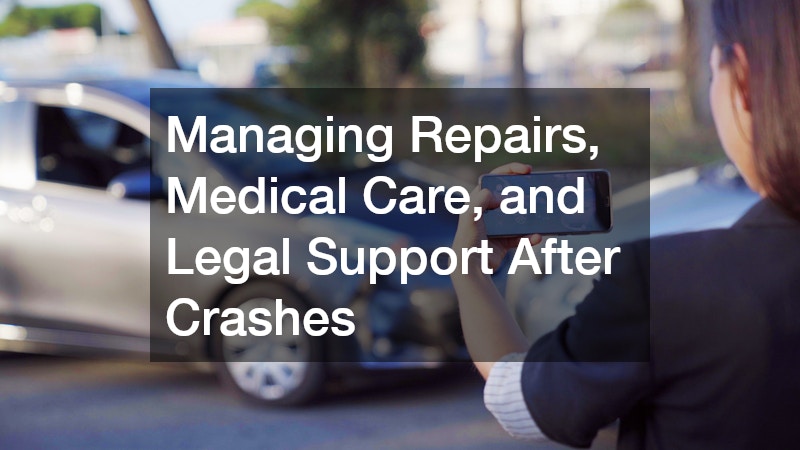
After a crash, most people find themselves dealing with several problems at once—injuries, a damaged vehicle, insurance questions, and uncertainty about what to do next. The situation can feel overwhelming because each decision affects recovery, finances, and long-term outcomes. Acting too quickly or too slowly can both lead to complications, which is why a structured approach matters.
This guide walks through the major areas that typically require attention after a collision, including medical care, vehicle repairs, documentation, and legal considerations. The goal is to help readers understand not only what to do, but also why each step matters and how to avoid common mistakes that can delay recovery or increase costs.
1. Prioritize Safety and Immediate Next Steps at the Scene

The moments immediately following a crash are often chaotic, but making calm, informed decisions can significantly reduce risk.
Key actions to take right away:
- Check yourself and passengers for injuries before moving
- If vehicles are in a dangerous location, carefully move to a safer area if possible
- Turn on hazard lights to alert other drivers
- Call emergency services and report the incident
- Exchange essential information with other drivers (name, insurance, contact details)
- Take photos of vehicle positions, road conditions, and visible damage
If the vehicle is not safe to drive, arranging emergency towing is important. This prevents further damage and ensures the vehicle is transported safely to a repair facility or storage lot. When waiting for assistance, remain in a secure location away from traffic whenever possible.
2. Seek Prompt Medical Attention and Document Injuries
Even when injuries appear minor, immediate evaluation is essential because many crash-related conditions develop slowly.
For urgent evaluation needs:
- Visit urgent care if injuries are not life-threatening but still require prompt attention
- Go to the emergency room for severe pain, head trauma, or suspected fractures
- Avoid delaying treatment, even if symptoms seem mild at first
In the days following the crash:
- Monitor symptoms like headaches, dizziness, or stiffness
- Keep records of all medical visits and diagnoses
- Follow all recommended treatment instructions closely
Proper documentation from urgent care visits can also support insurance claims and help establish a clear timeline of injury onset.
3. Understand the Role of Follow-Up Medical Care
Initial treatment is only the beginning for many crash-related injuries. Soft tissue damage, whiplash, and spinal misalignment often require ongoing care.
Working with a car accident chiropractor can help address musculoskeletal injuries that may not appear immediately after the crash. Many patients benefit from structured rehabilitation programs that focus on mobility, pain reduction, and long-term recovery.
A chiropractic care service may include:
- Spinal adjustments to restore alignment
- Soft tissue therapy to reduce inflammation
- Range-of-motion exercises to improve flexibility
- Progress tracking to measure recovery over time
Consistency is key. Skipping appointments or stopping treatment early can slow recovery and potentially worsen symptoms.
4. Organize All Crash-Related Documentation Early
After a collision, documentation becomes one of the most valuable tools for managing both medical and insurance processes.
Important records to maintain:
- Police reports and incident numbers
- Photos and videos from the crash scene
- Medical bills and treatment summaries
- Insurance correspondence and claim numbers
- Repair estimates and receipts
Organizing these materials into a single digital or physical folder helps prevent confusion later. It also makes it easier to respond quickly to insurance requests or legal inquiries if needed. Keeping a daily symptom journal can also strengthen the record of injury progression.
5. Evaluate Vehicle Damage Before Making Repair Decisions
Vehicle damage is not always fully visible immediately after a crash. What looks minor externally may involve structural or mechanical issues beneath the surface.
Before proceeding with repairs:
- Have the vehicle inspected by professionals at an auto collision shop
- Request a detailed written estimate that includes parts and labor
- Ask whether there is hidden or frame damage
- Compare multiple repair quotes if possible
Understanding auto repair estimates helps avoid unexpected costs later. Ask questions such as:
- What parts will be replaced vs. repaired?
- How long will the repair take?
- Will aftermarket or OEM parts be used?
Being informed at this stage helps ensure the vehicle is restored safely and correctly.
6. Choose a Reliable Repair Provider to Avoid Future Issues
Not all repair facilities offer the same level of quality or transparency. Choosing the right provider can directly affect vehicle safety and long-term performance.
A trustworthy collision repair service typically offers:
- Certified technicians with specialized training
- Written warranties on repairs
- Transparent communication about costs and timelines
- Positive customer reviews and proven experience
Before approving repairs:
- Request a written breakdown of all work
- Confirm parts availability and sourcing
- Ask about post-repair inspections or quality checks
Selecting a reputable provider reduces the risk of recurring mechanical issues or incomplete repairs.
7. Coordinate Insurance Claims Without Delays

Insurance claims can be one of the most time-consuming parts of post-crash recovery. Staying organized helps prevent unnecessary delays.
Helpful strategies include:
- Reporting the accident as soon as possible
- Providing accurate and complete information
- Submitting photos, estimates, and medical documentation promptly
- Keeping records of every communication with the insurer
It is also important to understand policy coverage limits, deductibles, and reimbursement timelines. Clear communication with all parties involved helps ensure smoother processing.
8. Know When to Consult Legal Professionals
Some crash situations involve complexities that go beyond basic insurance claims, especially when injuries or disputes arise. In these cases, the process often becomes more difficult because insurance companies may challenge the severity of injuries, question liability, or attempt to minimize payouts. What might initially seem like a straightforward claim can quickly evolve into a prolonged negotiation requiring detailed evidence and consistent follow-up.
A car accident lawyer can help interpret legal rights, negotiate with insurance companies, and ensure fair compensation is pursued. This includes reviewing policy language, assessing the strength of evidence, and identifying whether additional damages—such as lost wages or future medical costs—should be included in a claim. In more complex cases, car accident attorneys may assist with litigation or settlement negotiations when liability is disputed, especially if the insurance company is unwilling to offer a fair resolution or denies responsibility altogether.
Situations where legal support may be beneficial often involve more than just vehicle damage. Serious or long-term injuries can significantly increase the complexity of a claim by requiring ongoing medical documentation, specialist evaluations, and projections of future care. Even minor injuries that worsen over time can complicate settlement discussions if they were not fully documented from the beginning.
Disputes over fault are another common issue, particularly when both parties provide conflicting accounts of the crash. In these cases, evidence such as photos, witness statements, and police reports becomes critical, and legal guidance may be needed to interpret how liability is likely to be assigned. Similarly, denied or delayed insurance claims can create financial pressure, especially when medical bills or repair costs are already accumulating. Legal support can help push claims forward or challenge unfair denials.
Cases involving multiple parties are also more complex, as responsibility may be divided among several drivers, employers, or insurance providers. Determining how liability is shared often requires careful analysis of each party’s role in the incident and how their insurance coverage applies.
Before consulting an attorney, it is important to gather all relevant documentation, including medical records, police reports, and repair estimates. Having these materials organized in advance helps ensure that any legal consultation is more efficient and allows the attorney to quickly assess the strength and details of the case.
9. Navigate Complex Cases Like Rideshare Accidents
Accidents involving rideshare services often introduce additional layers of complexity because multiple insurance policies may be involved. Unlike standard vehicle collisions, liability in these cases is not always straightforward, since coverage can shift depending on whether the driver was waiting for a ride request, en route to pick up a passenger, or actively transporting someone at the time of the crash.
In these situations, an Uber accident attorney may help determine liability among the driver, the rideshare company, and other parties involved. These cases often require careful review of app status, driver activity, and insurance coverage at the time of the crash. This distinction is critical because different coverage levels may apply depending on the driver’s exact status within the app, and insurance companies may dispute responsibility based on those details.
One of the most important steps is identifying whether the driver was actively on a trip or simply logged into the app without a passenger assignment. This can significantly affect which insurance policy is responsible for covering damages and injuries. Even small differences in timing—such as whether a ride was accepted seconds before the crash—can influence how liability is assigned.
It is also helpful to collect app screenshots or ride details whenever possible. This may include trip confirmations, estimated pickup times, driver information, and any in-app messages related to the ride. These records can be valuable in reconstructing the sequence of events and confirming the driver’s status at the time of the accident, especially if platform data is later disputed or difficult to obtain.
Requesting official records from the rideshare company is another key step. These records may include driver activity logs, trip histories, GPS tracking data, and insurance policy information. Because companies often manage large volumes of data, these requests may take time and sometimes require formal legal procedures to access.
Throughout the process, documenting all communications carefully is essential. This includes keeping records of conversations with the driver, insurance representatives, medical providers, and any company representatives involved. Writing down dates, times, and summaries of each interaction helps create a clear timeline and prevents confusion later, especially when multiple parties are providing different accounts.
These cases can take longer to resolve due to overlapping policies and corporate involvement. The combination of multiple insurers, layered coverage rules, and corporate claims processes often means that careful documentation and patience are necessary to reach a fair resolution.
10. Balance Recovery, Repairs, and Legal Processes Efficiently
Managing multiple responsibilities after a crash can be overwhelming, especially when medical care, vehicle repairs, and insurance processes overlap. These responsibilities often move on different timelines, which makes it easy for important details to slip through the cracks if there isn’t a clear system for keeping everything organized.
Using a calendar is one of the most effective ways to stay on track. All medical appointments, follow-ups, and therapy sessions should be added as soon as they are scheduled. The same applies to vehicle-related tasks such as repair estimates, drop-offs, and pickup dates. Insurance deadlines for submitting documents or responding to requests should also be clearly marked. Setting reminders a day or two in advance helps ensure that nothing is forgotten during busy or stressful periods.
It is also important to prioritize medical recovery over administrative tasks. Attending all medical appointments should take precedence, even when paperwork or insurance calls feel urgent. Resting and following treatment instructions should come before spending time on claims or documentation. Instead of trying to handle everything at once, it is more effective to complete paperwork in short, manageable sessions so that recovery remains the primary focus. Consistency in care often has a greater impact on long-term healing than speed in handling administrative tasks.
Regular communication with repair shops and insurers helps prevent confusion and delays. It is helpful to establish a primary contact person at each repair facility and insurance company so that communication stays clear and consistent. Rather than checking in constantly, it is better to request updates at scheduled intervals. Keeping a written log of conversations, including dates, names, and key points discussed, ensures that there is always a reference if questions arise later. It is also important to confirm any approvals or instructions in writing to avoid misunderstandings.
Finally, it is essential to avoid rushing decisions under pressure. Estimates, treatment plans, and settlement offers should be reviewed carefully before any agreement is made. Asking questions whenever something is unclear is important, rather than making assumptions or feeling pressured into quick decisions. When possible, comparing options for medical care or repair services can lead to better outcomes. Even if urgency is communicated by insurers or other parties, it is often worth taking the time needed to fully understand the implications before moving forward.
Maintaining balance across these responsibilities helps reduce stress and ensures that no critical steps are missed during recovery. It also creates a clearer sense of control over the process, making it easier to adjust priorities as new needs or developments arise.
Conclusion
Managing the aftermath of a crash requires attention to multiple interconnected areas, from health and transportation to financial and legal responsibilities. Each step plays a role in ensuring a smoother recovery process and preventing long-term complications. By staying organized, seeking appropriate care, and making informed decisions, individuals can regain stability more effectively after a difficult and often disruptive event.